From Cambridge English Language AS,AL 9093 to Jordan Peterson
From Cambridge English Language AS, AL 9093 to Jordan Peterson by bunPeiris of Moratuwa
The Unseen Value of English in Cambridge A Levels: A Critical Pathway to University and Beyond
While Cambridge A Levels are rightly known for their specialization, the subjects of English Language and Literature in English are often mistakenly viewed as mere options. In reality, they are foundational courses that provide the essential springboard for critical thinking and academic success at the university level.
The core of their value lies in developing a superior command of the English language—a transferable skill of paramount importance. The Cambridge A Level English Language syllabus (9093) trains students in linguistic analysis, focusing on language, form, and structure. This is not an abstract exercise; it is practical training in deconstructing how communication works. For instance, when a person uses hyperbole like, “Sorry, I have a million things to do,” we learn to identify not just the device, but its effect: in this case, making a refusal seem unavoidable. This is the first step in understanding how language can influence, persuade, and even manipulate an audience.
This analytical skill is directly streamlined for higher education. The 9093 syllabus is designed as a precursor to Critical Discourse Analysis (CDA) at the postgraduate level. Where A Level teaches you to identify literary devices and their effects, CDA soars higher, using these tools to investigate how language is used as an instrument of social control, domination, and resistance. It reveals the mechanisms behind social inequality, discrimination, and how public opinion can be shaped by political entities, mass media, and international corporations.
Furthermore, this knowledge is empowering. By understanding how language can be used to mislead, one can also learn to use it with integrity. Students learn to craft highly effective and convincing arguments, allowing them to influence others in good faith. This competence is the key to ascending in both academic and professional pursuits.
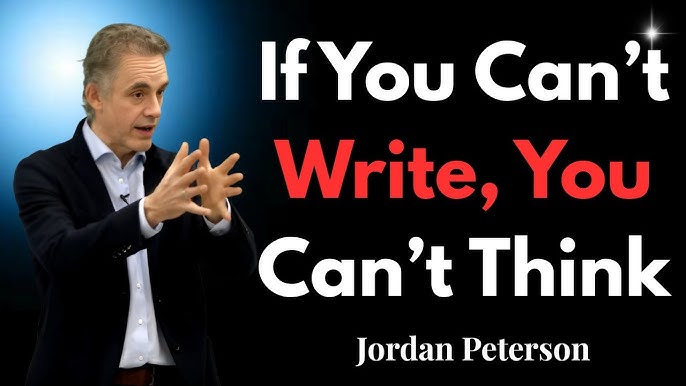
Ultimately, the prime measure of competence in English is superior writing skill, as it formalizes and reveals one’s capacity for critical thinking. Dr. Jordan Peterson emphasizes that superior command in writing is synonymous with higher competence in critical thinking itself. Therefore, the strategic importance of English Language and Literature at the A Level cannot be overemphasized. It is the essential discipline that equips students not just to succeed in exams, but to navigate, critique, and influence the world
Quote Jordan Peterson [My transcript of one of his video clips]
If you could give one piece of advice to us on how we would be able to put our opinion out there to actually make people listen to and not to cause some mindless conflict, which is yelling, what advice would you give to us?
Learn to write.
[laughter from the crowd of students]
I am dead serious.
[Silence]
Because writing is formalized thinking. So way you write, first of all, you need a problem. Why write if you don’t have a problem? So this is good advice if you are writing an essay, by the way, in your classes. Take a bloody problem you want to write about; otherwise, it’s false, right from the start. It’s up to you to engage with the material until you find something that grips you and that you desire to investigate. You need a problem. The next thing is you must have something to say about it. So, reading, reading is really good for that. Read as much as you can. Address the problem. Now you know a bunch of things. At least provisionally know them. You have access to them. Now you start sorting through them. OK. well. May be I need to summarize what I learned. I need to iron out the contradictions between what I learned. I need to elegantly formulate. I need to get my word choice right. I need to get my phrase choice right. I need to get my sentence choice right. I need to organize sentences into proper paragraphs, and paragraphs into proper sequence so that I have a coherent argument. At the same time, what you are doing is integrating your own personality at the highest and most abstract level of organization, and you’re sharpening your tools, and putting yourself straight because you’re learning to think. So I would say, pick up some hard problems and learn to write very carefully. When I say, pay attention to the word, I mean that. Pick the right word. When I wrote my first book, “Maps of Meaning”, I believe I wrote every sentence 50 times, 50 variants of every sentence, and I read it once. I read it again. I read it again. I read it again. I have little competition which sentence is better, which sentence is better? I pick that sentence, and do the same with paragraphs over many, many years.
Horn your word. That’s the most powerful, bar none. You’re an effective speaker and a communicator; you have all the authority and confidence that there is. Maybe you are taking a university degree in humanities. What is a humanities degree for? Teach you how to think, you learn to think by writing. Now there’s more to read and speak and all of that. The best thing you can do is read and write. Every day, a couple of hours every day. Write about things you find important. Teach you how to think the best thing you can do is read and write, and see if you can discover what you believed to be true. Write about things you believe. See if what you discover is true. If you look at people who are phenomenally successful across life, there are various reasons; one of them is they are unbelievably good in articulating what they are aiming at, strategizing, negotiating, and enticing people with a vision forward. Get your words together man, that makes you unstoppable. That makes you unstoppable. That’s the core of humanity. Get your words together, make yourself an articulate creature, and then you are deadly in the best possible way. so take that seriously. And you students, in you might think in your most cynical moments that you have to offer what your professors want; they and you gerrymander the content of your language to suit their predilections, or what you consider to be their predilections. First of all, there’s only very small minority of professors who are corrupt enough to punish you for a high-quality essay that they don’t agree with. Though that is reprehensible, that doesn’t happen very often. More importantly, it’s the highest academic sin to do that. Because what you are here to do is learn to find your true voice. Every time you deviate from that expedient reason, you corrupt yourself. And not in a trivial way. Because when you formulate your arguments, they become a permanent part of your character. You carry that with you. That become a part of the structure in which you view the world. And guide your actions. So you hold your words pristine. And you work in a dedicated way to be become as clear and articulate as you can possibly become. And nothing more practical & noble than that at the same time. That’s why the humanities are so valuable. You think what good is a humanities degree? Ah! You come out be able to think and speak and write, no matter where you go, you are headed for the pinnacle and hopefully in a positive for everyone. That’s what I would recommend.
Quote Jordan Peterson [My transcript of another one of his video clips].
It is very hard to teach people to write. It is unbelievably time-intensive. And marking a good essay, that’s very easy, check A. Marking a bad essay, oh my god!, words are wrong, phrases are wrong, sentences are wrong, they are not ordered great in a paragraph, the paragraphs are not coherent, and the whole thing makes no sense. So, trying to tell the person what he did wrong, he did everything wrong, everything about the essay is wrong. Wow! That’s not helpful either. Find the few little things he did half right, and you have to teach him what they did wrong. It’s really expansive. So what I did with this rubric was try to adjust that from the production side instead of the grading side. The best thing you can do is teach people to write because there’s no difference between that from thinking.
And of the things that just blows me about the universities is that no one ever tells the students why they should write something. Why do you have to do this assignment why are you writing? You need the grade, no, you need to learn to think because thinking makes you act effectively in the world, thinking makes you win the battles you undertake, those could be battles for good things. If you can think and speak and write, you are absolutely deadly. Nothing can get in your way. That’s why you learn to write. I can believe that people haven’t been told that. It’s the most powerful weapon you can possibly provide someone with.
I know lots of people who are staggeringly successful, and watch them throughout my life. Those people you don’t want to have an argument with you. Those will slash you into pieces. But not in a malevolent way. If you are going to make your point, they are going to make that point; you better have your points organized, otherwise, you are going to look like an absolute idiot. You are not going to get anywhere. And if you can formulate your arguments coherently, make a presentation, you can speak to people, if you can lay out a proposal, god, people give you money, they give you opportunities, you have influence, that’s what university is for.
That’s where you study Critical Discourse Analysis. Teun A. van Dijk exemplifies the characteristics of CDA:
“Among the descriptive, explanatory, and practical aims of CDA studies is the attempt to uncover, reveal or disclose what is implicit, hidden, or otherwise not immediately obvious in relations of discursively enacted dominance or their underlying ideologies. That is, CDA specifically focuses on the strategies of manipulation, legitimation, the manufacture of consent, and other discursive ways to influence the minds (and indirect actions) of people in the interest of the powerful.
This attempt to uncover the discursive means of mental control and social influence implies a critical and oppositional stance against the powerful and the elites, especially those who abuse their power.
On the other hand, studies in CDA try to formulate or sustain an overall perspective for the enactment and development of counter-power and counter-ideologies in practices of challenge and resistance.
https://youtu.be/bfDOoADCfkgJordan Peterson
https://en.wikipedia.org/wiki/Jordan_Peterson
https://www.linkedin.com/in/jordanbpeterson/?originalSubdomain=ca