
Cambridge OL English [1123]: P 1, Q & A [1]
Cambridge OL English[1123] : P1 Reading 1 Q and A by bunPeiris of Moratuwa
China’s Trap: How America Fell Into Its Own Creation
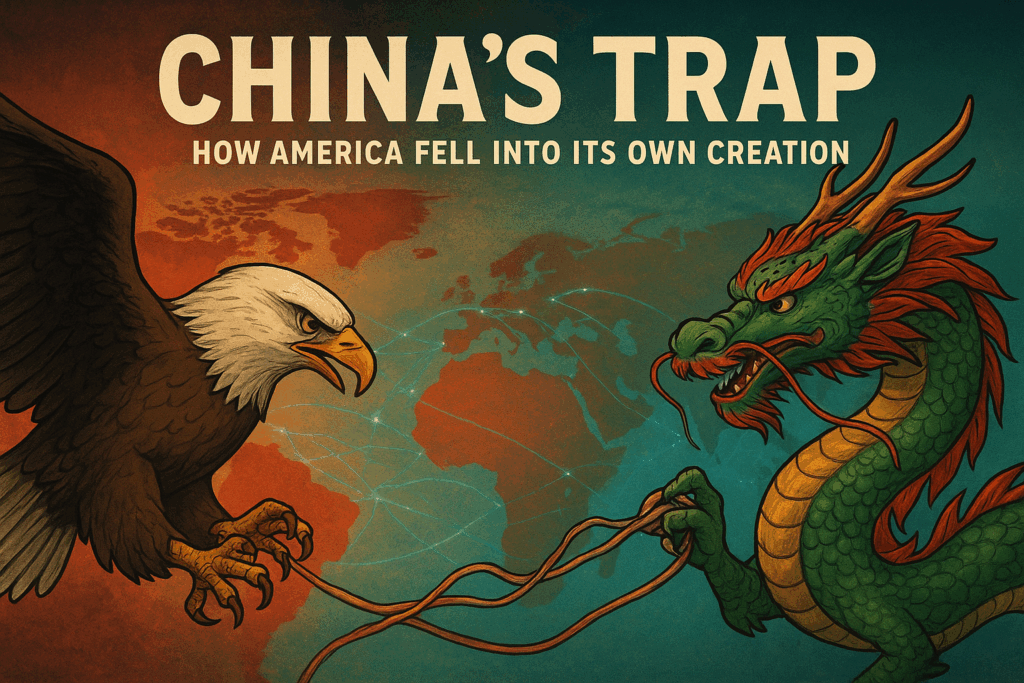
For millennia, the planet has been a stage for the most intricate and relentless of dramas. Not merely of predator and prey in the verdant jungle, but of empires and nations in the concrete landscapes they build. Here, in the early 21st century, we observe one of the most fascinating phenomena in the history of human civilization. A story of strategy, adaptation, and a trap, laid not with steel, but with silk and circuitry.
Our story begins with a hunter, a formidable creature at the peak of its powers. Let us call it the ‘American Eagle.’ It soared in the post-war skies, its shadow defining the world below. It built systems: a financial forest of immense complexity, a digital nervous system that connected the globe, and a political ecosystem that encouraged openness. It was, it believed, the architect of its own perfect world.
And into this world, another creature began to stir. A ‘Chinese Dragon,’ emerging from a long slumber. The Eagle, confident in its own creation, believed the Dragon would have no choice but to live within the rules of the garden it had planted. It welcomed the Dragon, offered it space to grow, believing that prosperity would inevitably reshape the Dragon in the Eagle’s own image. This was the first miscalculation.
What the Eagle saw as a system of control, the Dragon saw as a syllabus. It studied. It learned the paths through the financial forest. It mastered the flow of the digital rivers. It observed that the Eagle’s greatest strength—its short-term cycles of power and its appetite for immediate gratification—could also be a profound weakness.
And so, the Dragon began to build. Not a rival garden to tear down the old one, but something far more ingenious. A trap within the garden. It wove threads of economic interdependence so strong that to pull one would make the entire tapestry unravel. It offered the sweetest fruits—affordable goods, vast markets, easy capital—until the very ecosystem of the Eagle came to depend on this nourishment. The trap was baited with prosperity.
The Eagle, focused on the immediate feast, did not notice the silken threads being laid around its talons. It cheered as its factories migrated, not seeing it was exporting its own industrial skeleton. It celebrated soaring stock markets, not perceiving the Dragon’s growing influence within its own financial temples. The very tools the Eagle had built—global supply chains, international trade law, the internet—were being used to construct a cage of its own making. This was not a violent ambush. It was a patient, gradual enclosure. And now, we observe the moment of realization.
The Eagle looks down and finds itself entangled. To strike out aggressively would be to shatter the global economy it leads. To sever the ties is to inflict immense pain upon itself. The Dragon, in its patience, has made conflict unthinkably costly. The hunter is caught, not by a snare it stumbled into in foreign woods, but by the very vines it allowed to grow in its own backyard. So, what is the lesson of this extraordinary spectacle?It is a lesson of ecosystems. The Eagle believed it was the master of its domain. The Dragon understood it was but a part of a larger, interconnected system. The most effective trap is not one you force another into; it is one you persuade them to build around themselves, all the while believing it is a throne.
The question that now hangs in the air, as delicate and powerful as a spider’s web, is not how the Eagle fell into the trap. It is whether this majestic creature, renowned for its power and adaptability, can learn a new kind of wisdom. Not the wisdom of the hunter, but the wisdom of the gardener—the patience to tend to its own soil, the foresight to prune the invasive vines, and the strength to build anew, with an eye not just on the next season, but on the next century.
For in the great drama of life on this planet, the most successful creature is not always the strongest, but the one that understands the system most profoundly.”
Cambridge O Level English Language (1123) P1 Reading
Questions
Read the passage carefully, and then answer the questions that follow.
Text: CHINA’S TRAP: How America Fell Into Its Own Creation (as provided above)
Section A: Reading for Meaning (Short-answer questions)
1. According to the first two paragraphs, what did the ‘American Eagle’ believe would happen when it welcomed the ‘Chinese Dragon’? [1 mark]
2. Name two things the ‘Dragon’ offered as “the sweetest fruits” to bait its trap. [2 marks]
3. What does the word “miscalculation” (paragraph 5) suggest about the Eagle’s initial strategy? [1 mark]
Section B: Analysis of Language and Effect
4. Re-read paragraph 3.
How does the writer use language to describe the ‘Chinese Dragon’ at the beginning of its rise? [2 marks]
5. Re-read the sentence: “It was a patient, gradual enclosure.”
Explain how the writer uses language in this sentence and the surrounding text to convey the nature of the trap. [2 marks]
Section C: Reading for Inference (Reading Between the Lines)
6. What does the writer imply by stating that the Eagle was exporting its “own industrial skeleton” (paragraph 9)? [2 marks]
7. By the end of the passage, the Eagle is faced with a dilemma. What two difficult choices does it implicitly face, according to the text? [2 marks]
Section D: Extended Response (Writer’s Effect)
8. Re-read the whole passage.
How does the writer use the extended metaphor of the natural world (the Eagle, the Dragon, the garden, the trap) to present the relationship between America and China?
You should comment on:
How the metaphor describes the characters and strategies of America and China.
How the metaphor helps to explain the problem America now faces. [5 marks]
Model Answers
Section A: Reading for Meaning
1. The Eagle believed that the Dragon would live within its rules and that prosperity would reshape the Dragon in the Eagle’s own image. [1 mark]
(Must capture the idea of assimilation/conformity.)
2. Any two of the following: [1 mark each, total 2]
- Affordable goods
- Vast markets
- Easy capital
3. It suggests that the strategy was based on an error of judgment; it was a strategic error or a flawed assumption, not just a simple mistake. [1 mark]
Section A: Reading for Meaning (Short-answer questions)
1. According to the first two paragraphs, what did the ‘American Eagle’ believe would happen when it welcomed the ‘Chinese Dragon’? [1 mark]
2. Name two things the ‘Dragon’ offered as “the sweetest fruits” to bait its trap. [2 marks]
3. What does the word “miscalculation” (paragraph 5) suggest about the Eagle’s initial strategy? [1 mark]
Section B: Analysis of Language and Effect
4. Re-read paragraph 3.
How does the writer use language to describe the ‘Chinese Dragon’ at the beginning of its rise? [2 marks]
5. Re-read the sentence: “It was a patient, gradual enclosure.”
Explain how the writer uses language in this sentence and the surrounding text to convey the nature of the trap. [2 marks]
Section C: Reading for Inference (Reading Between the Lines)
6. What does the writer imply by stating that the Eagle was exporting its “own industrial skeleton” (paragraph 9)? [2 marks]
7. By the end of the passage, the Eagle is faced with a dilemma. What two difficult choices does it implicitly face, according to the text? [2 marks]
Section D: Extended Response (Writer’s Effect)
8. Re-read the whole passage.
How does the writer use the extended metaphor of the natural world (the Eagle, the Dragon, the garden, the trap) to present the relationship between America and China?
You should comment on:
- How the metaphor describes the characters and strategies of America and China.
- How the metaphor helps to explain the problem America now faces.
[5 marks]
Model Answers
Section A: Reading for Meaning
1. The Eagle believed that the Dragon would live within its rules and that prosperity would reshape the Dragon in the Eagle’s own image. [1 mark]
(Must capture the idea of assimilation/conformity.)
2. Any two of the following: [1 mark each, total 2]
- Affordable goods
- Vast markets
- Easy capital
3. It suggests that the strategy was based on an error of judgment; it was a strategic error or a flawed assumption, not just a simple mistake. [1 mark]
Section B: Analysis of Language and Effect
4. The writer uses the metaphor of a creature “emerging from a long slumber” [1 mark]. This implies that China was not a new creation, but a powerful entity that had been dormant for a long time and was now re-awakening with potential energy and power [1 mark].
5. The adjective “patient” and “gradual” directly state the slow, careful nature of the trap [1 mark]. This is reinforced by the metaphor of “enclosure,” which suggests something being slowly surrounded and confined, rather than captured in a single, violent event, making it more insidious and difficult to detect [1 mark].
Section C: Reading for Inference
6. This implies that by moving its factories abroad, America wasn’t just losing jobs; it was losing the core structural framework of its economy [1 mark]. A skeleton is essential for support and movement, so the writer infers that this action fundamentally weakened America’s long-term industrial capacity and self-sufficiency [1 mark].
7. The two difficult choices are:
i) To strike out aggressively, which would shatter the global economy [1 mark].
ii) To sever the ties of interdependence, which would inflict immense pain upon its own economy [1 mark].
Section D: Extended Response (Writer’s Effect)
8. Model Answer
The writer uses the extended metaphor of the natural world very effectively to simplify and dramatise a complex geopolitical situation.
Firstly, the metaphor clearly defines the characters and their strategies. The “American Eagle” is portrayed as a majestic “hunter,” suggesting power, dominance, and a top-of-the-food-chain mentality that is proactive and aggressive [1 mark]. In contrast, the “Chinese Dragon” is introduced as a creature that “studied” and “learned,” portraying it as intelligent, patient, and strategic, more of a clever strategist than a brute force opponent [1 mark]. China’s strategy is described using natural imagery like weaving “silken threads” and offering “sweetest fruits,” which makes its actions seem organic, seductive, and difficult to resist, unlike a conventional military threat [1 mark].
Secondly, the metaphor brilliantly explains the problem America faces. The “trap within the garden” is not a foreign object but made from the “very vines it allowed to grow in its own backyard” [1 mark]. This powerfully conveys the idea that America’s own systems—globalisation, free trade—were used against it. The dilemma is framed as the Eagle being “entangled,” a natural state for an animal caught in vines or a web, which is a much more complex and humiliating predicament than being defeated in a fight. It suggests the solution is not simple force but a new kind of “wisdom“—that of a “gardener” who understands long-term ecosystem management [1 mark].
Language and Effect Analysis
1. Question: How does the author use metaphor to establish the central conflict?
- Answer: Metaphor: “Our story begins with a hunter, a formidable creature at the peak of its powers. Let us call it the ‘American Eagle.’… And into this world, another creature began to stir. A ‘Chinese Dragon,’…” shows the general effect of simplifying a complex geopolitical situation into a powerful, primal struggle. Illustrating how the nations are framed not as political entities but as instinct-driven, archetypal animals in a naturalistic battle for dominance.
2. Question: How does the extended metaphor of the “garden” and the “trap” shape the reader’s understanding of the strategic dilemma?
- Answer: Extended metaphor: “The Eagle, confident in its own creation, believed the Dragon would have no choice but to live within the rules of the garden it had planted.” portrays the general effect of creating a sustained, coherent analogy that frames global order as a cultivated ecosystem. Demonstrating how America’s system is portrayed as a controlled environment, which becomes the very location of its own entrapment through misplaced confidence.
3. Question: How does the use of personification make the economic relationship between the nations more tangible?
- Answer: Personification: “It offered the sweetest fruits—affordable goods, vast markets, easy capital—until the very ecosystem of the Eagle came to depend on this nourishment.” depicts the general effect of giving abstract economic concepts life-like and seductive qualities. Characterizing China’s economic strategy not as a policy, but as a deliberate, almost predatory act of offering irresistible bait to a vulnerable creature.
4. Question: How does the contrast between “violent ambush” and “patient, gradual enclosure” emphasize the unique nature of the threat?
- Answer: Contrast: “This was not a violent ambush. It was a patient, gradual enclosure.” highlights the general effect of using opposing ideas to clarify a distinction. Underscoring the central argument that China’s strategy is insidious and non-confrontational, making it more dangerous and difficult to counter than a traditional military threat.
5. Question: How does the rhetorical question at the climax of the text engage the reader?
- Answer: Rhetorical question: “The question that now hangs in the air… is not how the Eagle fell into the trap. It is whether this majestic creature… can learn a new kind of wisdom.” engages the general effect of directly involving the reader in the narrative’s central problem. Shifting the focus from a historical account to an unresolved, pressing dilemma that requires the reader’s intellectual and moral judgment about the future.