
Argumentative Essay 1: Nile
Written by bunPeiris.
Argumentative Essay for Cambridge/Edexcel/AQA OL/AL & Commentary on Language, Form and Structure for Cambridge/Edexcel/AQA AL
The Nile’s Unparalleled Legacy

[a] Introductory Paragraph
The River Nile is not merely a river. It is a singular force of nature and a cornerstone of human civilization, and its unique characteristics render it unlike any other river on Earth. In the beginning, this essay will argue for the Nile’s unparalleled status by first examining its life-giving annual floods that created Egypt’s fertile black earth, then by exploring its role as the ancient world’s most formidable transportation network, and finally, by analyzing its continued critical function as a modern transportation artery for multiple nations. While other rivers have their merits, the Nile’s combination of agricultural, historical, and ongoing economic roles creates a legacy that is unmatched.
First Body Paragraph (PEEL)
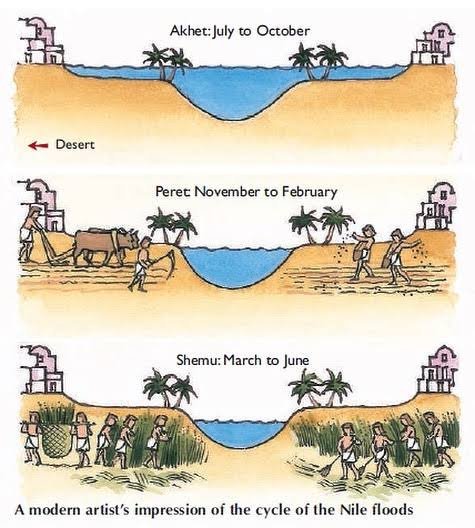
Point: The primary source of the Nile’s uniqueness lies in its annual inundation, a natural phenomenon that directly gave rise to and sustained one of history’s most enduring empires. Evidence: While other rivers, such as the Tigris and Euphrates, also flooded, the Nile’s flood was remarkably predictable. It brought nutrient-rich silt, the “black land” or Kemet, which starkly contrasted the barren “red land” of the desert. The Greek historian Herodotus aptly called Egypt “the gift of the Nile,” and this statement encapsulates the river’s absolute necessity. Explanation: This black earth allowed for surplus agriculture, which in turn fueled population growth, social specialization, and the rise of a complex state. No other river’s flood was so intrinsically linked to the very identity and prosperity of a civilization. The predictable, fertile bounty of the Nile provided the stable economic foundation upon which pharaohs could build their monumental legacy; it was the engine of the Egyptian economy and the bedrock of its cosmological beliefs. Link: Thus, this agricultural miracle established the foundational precondition for the grandeur that was to follow.

Second Body Paragraph (PEEL)
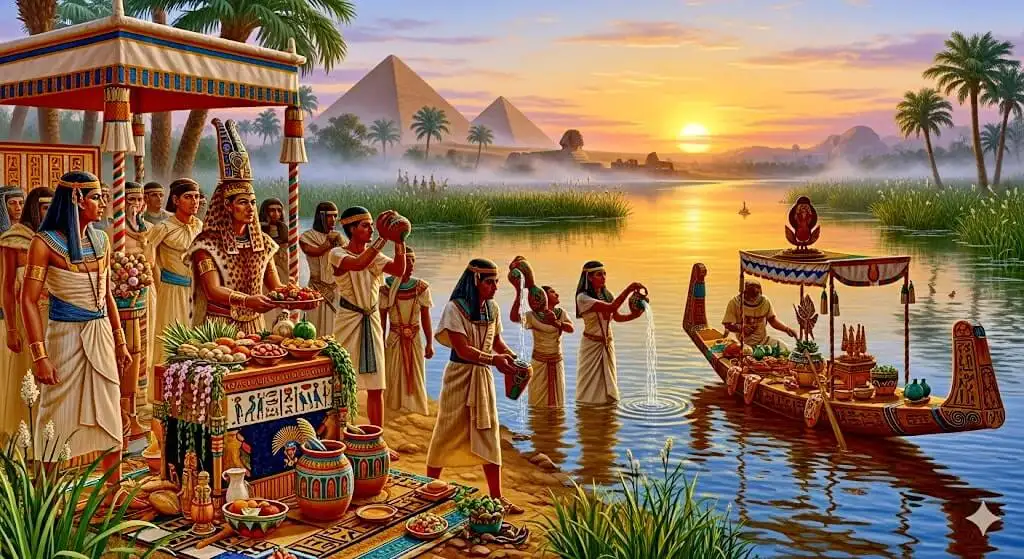
Point: Beyond nurturing a civilization, the Nile served as the ancient world’s most efficient and powerful conveyor belt, and it enabled construction projects of a scale that remains baffling even today. Evidence: The massive blocks of limestone and granite used to build the pyramids at Giza were quarried from distant locations, and some weighed over sixty tons. This Herculean task was accomplished not by magic, but by the river’s mighty current and its network of canals. Explanation: Egyptian engineers would load these colossal stones onto specially built, immense barges. During the flood season, the elevated water levels allowed these heavy-laden vessels to float far closer to the construction sites than would ever be possible under normal conditions. The river did the heaviest lifting, and it transformed an impossible logistical nightmare into a manageable, albeit monumental, engineering challenge. Link: Consequently, the Nile was the indispensable hydraulic tool without which the iconic symbols of ancient Egypt could never have risen from the desert sands.
Third Body Paragraph (PEEL with Counter-Argument)
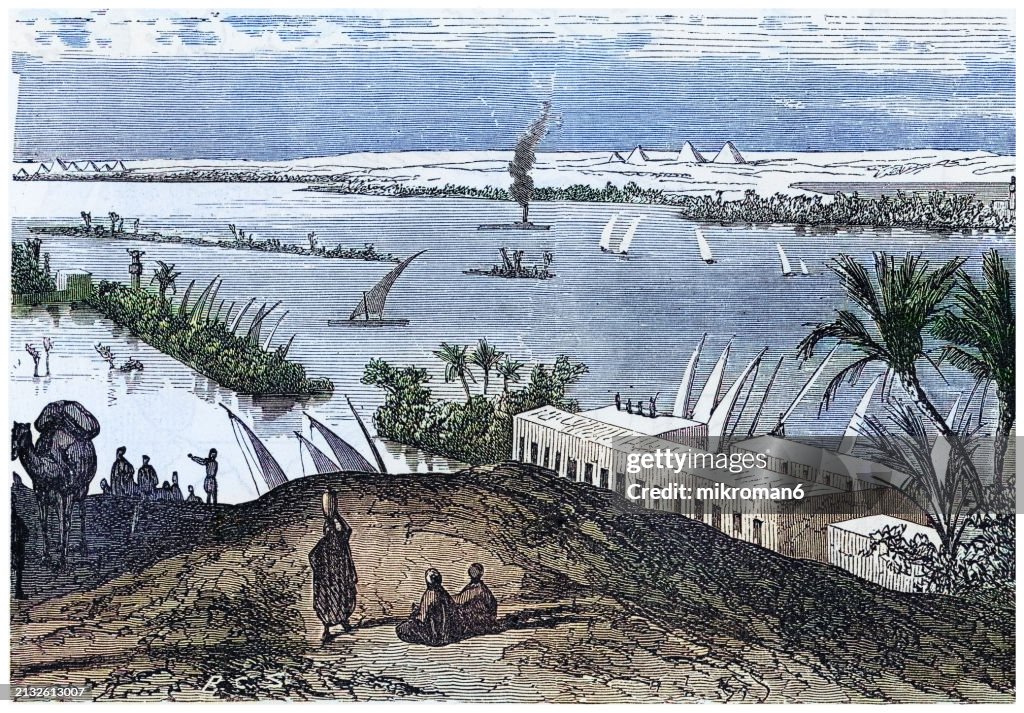
Point: In the modern era, the Nile continues its vital role as a central transportation channel, and it binds multiple nations together in a complex web of economic and social interdependence. Evidence: Today, the river facilitates the movement of goods and people through Sudan, South Sudan, Ethiopia, and Egypt. It serves as a cost-effective and crucial logistical route in a region where overland transport infrastructure is often underdeveloped. Explanation: This enduring utility demonstrates that the Nile’s significance is not confined to the history books. It remains a dynamic and essential component of contemporary regional economics and daily life. Link: Its continuous service for millennia solidifies its status as a perpetually relevant geographic feature.
[b] Counter-Argument Paragraph
Point: A skeptic might argue that the Nile is not truly unique, and they could point to other great rivers like the Amazon or the Mississippi. Evidence: The Amazon is a far mightier river by volume, and the Mississippi has been a crucial American trade route for centuries. Explanation: While these rivers are indeed important, the argument for the Nile’s uniqueness does not rest on a single attribute but on the confluence and historical impact of all its features. The Mississippi never produced an annual, predictable flood that defined a civilization’s calendar and religion; the Amazon, while biologically rich, was not the centralized, controllable lifeline for a monolithic state. The modern transportation on these other rivers is significant, but it is built upon a historical foundation that is diffuse and varied. Link: Therefore, this counter-argument fails to account for the holistic and historically unparalleled role the Nile has played.
[c] Concluding Paragraph
In conclusion, the River Nile stands alone in the annals of our world. Its singular combination of the life-giving annual flood, its function as an ancient heavy-transport system, and its persistent role as a modern economic artery creates a legacy that is unmatched. From the black earth that fed the workers to the watery highway that carried the stones for the pyramids, and onto the trade routes of today, the Nile’s story is inextricably woven into the story of humanity itself. It is, and will likely remain, truly unlike any other.
Notice to students
The Subtitles for Paragraphs and terms Point, Evidence, Explanation, Link are inserted in the essay only for guidance. Indeed, students must not reproduce the terminology in their own essays.
Students may follow the structure indicated with these technical terms.
A Point by Point Commentary on Language and Style on “The Nile’s Unparalleled Legacy”

This commentary analyzes the Language, Form, and Structure of the essay “The Nile’s Unparalleled Legacy” and argues its effectiveness in impressing its theme upon the reader.
T/GAP Analysis:
- Tone: Authoritative, persuasive, and declarative. The essay asserts its position with confidence, using definitive language to convince the reader.
- Genre: Formal argumentative essay. It follows a strict academic structure with a clear thesis, body paragraphs with evidence, and a concluding summary.
- Audience: Educated readers or students, likely in a secondary or undergraduate academic context, who are familiar with basic historical concepts but require a synthesized, persuasive argument.
- Purpose: To argue persuasively that the River Nile holds a unique and unparalleled position in human history due to its specific combination of agricultural, logistical, and continuous economic roles.
Analysis of Language Features and Their Effects:
[1] Structural & Organizational Techniques
- Thematic Statement in the Introductory Paragraph: serves to present the central argument clearly and directly, anchoring the reader’s understanding from the outset.
- Plan of Development (POD) in the Introductory Paragraph: outlines the essay’s structure for clarity and logical flow, setting reader expectations for a well-organized argument. POD summarized what is stated in the body paragraphs.
- PEEL Structure: provides a rigid framework that ensures each point is logically supported and explained, building a convincing and methodical case for the reader.
- Counter-Argument and Rebuttal: introduces a credible opposing viewpoint to demonstrate critical thinking, strengthening the writer’s position by proving it can withstand scrutiny.
[2] Sentence Types (Syntactic Variety)
- Simple Sentence: (e.g., “It is a singular force of nature.”) delivers key ideas with definitive clarity and punch, emphasizing a core point without complexity.
- Compound Sentence: (e.g., “The Greek historian Herodotus aptly called Egypt ‘the gift of the Nile,’ and this statement encapsulates the river’s absolute necessity.”) connects two related independent clauses of equal importance, creating a flowing and cohesive narrative for the reader.
- Complex Sentence: (e.g., “While other rivers like the Tigris and Euphrates also flooded, the Nile’s flood was remarkably predictable.”) demonstrates a sophisticated relationship between ideas by subordinating one clause to another, showing nuanced contrast and deepening the analytical quality of the argument.
- Compound-Complex Sentence: (e.g., “The predictable, fertile bounty of the Nile provided the stable economic foundation upon which pharaohs could build their monumental legacy; it was the engine of the Egyptian economy and the bedrock of its cosmological beliefs.”) showcases syntactic maturity by weaving together multiple ideas, persuading the reader through a layered and comprehensive explanation.
[3] Rhetorical & Literary Devices
- Metaphor: (e.g., “cornerstone of human civilization,” “engine of the Egyptian economy”) reveals the fundamental and supporting nature of the Nile, illustrating its indispensable and mechanical role in development.
- Juxtaposition: (e.g., “the ‘black land’… starkly contrasted the barren ‘red land'”) emphasizes the dramatic difference created by the Nile, sharpening the reader’s perception of its transformative power.
- Allusion: (e.g., referencing Herodotus) lends authority and a historical depth to the argument, bolstering the essay’s credibility for the reader.
- Parallelism: (e.g., “agricultural miracle, ancient engineering, and modern economic necessity”) creates a sense of balance and rhythmic emphasis, highlighting the multiple, equal facets of the Nile’s uniqueness.
- Periodic Sentence: (e.g., “From the black earth that fed the workers to the watery highway that carried the stones for the pyramids, and onto the trade routes of today, the Nile’s story is inextricably woven into the story of humanity itself.”) builds suspense and emphasis by withholding the main clause until the end, reinforcing the key point for the reader.
- Rhetorical Question: (implied in the counter-argument: “Couldn’t other rivers claim the same?”) engages the reader’s critical thinking by presenting a potential objection, making the subsequent refutation more persuasive and interactive.
[4] Diction & Discourse Markers
- Formal Diction: (e.g., “unparalleled,” “singular,” “confluence,” “monolithic”) establishes an academic and authoritative tone, convincing the reader of the writer’s expertise and the seriousness of the subject.
- Discourse Marker “Thus”: signals a logical conclusion derived from the preceding evidence, guiding the reader to the intended inference within a paragraph.
- Discourse Marker “Consequently”: indicates a strong result or effect, strengthening the causal connection between the Nile’s function and its historical impact for the reader.
- Discourse Marker “Therefore”: introduces the decisive conclusion of the rebuttal, invalidating the opposing viewpoint and reinforcing the essay’s main argument
A Comprehensive and Cohesive Language Analysis of “The Nile’s Unparalleled Legacy”
This essay, “The Nile’s Unparalleled Legacy,” is a formal argumentative piece. Its Tone is authoritative, persuasive, and declarative, establishing credibility and conviction. The Genre is an academic argumentative essay, requiring a clear thesis, structured evidence, and logical reasoning. The intended Audience is likely educated readers or students, familiar with basic historical concepts but seeking a deeper, synthesized understanding. The essay’s core Purpose is to persuade the reader of the River Nile’s unique status by presenting a multi-faceted argument grounded in historical and contemporary evidence.
To achieve this purpose, the essay employs a range of sophisticated language features. The Thematic Statement serves to present the central argument clearly and directly, anchoring the reader’s understanding from the outset. The Plan of Development (POD) outlines the essay’s structure for clarity and logical flow, setting reader expectations for a well-organized argument. The consistent use of the PEEL Structure provides a rigid framework that ensures each point is logically supported and explained, building a convincing and methodical case for the reader.
Specific syntactic and rhetorical choices further enhance the essay’s persuasive power. Simple Sentences deliver key ideas with definitive clarity and punch, emphasizing core points without distraction. Compound Sentences connect related independent clauses of equal importance, creating a flowing and cohesive narrative for the reader. Complex Sentences demonstrate sophisticated relationships between ideas by pairing dependent and independent clauses, showing nuanced contrasts and causal links that deepen the argument. Compound-Complex Sentences showcase syntactic maturity by weaving together multiple ideas, persuading the reader through a layered and comprehensive explanation that mirrors the complexity of the subject itself.
Beyond sentence types, other stylistic devices are strategically deployed. The Metaphor of the “cornerstone of human civilization” reveals the fundamental and supporting nature of the Nile, illustrating its indispensable role in development. Periodic Sentences build suspense and emphasis by withholding the main clause until the end, reinforcing the key point for the reader. Parallel Structure, as seen in “agricultural miracle, ancient engineering, and modern economic necessity,” creates a sense of balance and rhythmic emphasis, highlighting the multiple, equal facets of the Nile’s uniqueness. Strategic Discourse Markers like “Thus,” “Consequently,” and “Therefore” signal logical conclusions and causal relationships, guiding the reader through the argument’s progression and strengthening its internal logic. Furthermore, Juxtaposition of the “black land” against the “red land” emphasizes the dramatic difference created by the Nile, sharpening the reader’s perception of its transformative power. Finally, the Allusion to Herodotus lends authority and a historical depth to the argument, bolstering the essay’s credibility for the reader.
Cumulatively, the interplay of these language features creates a powerful, resonant, and ultimately persuasive effect. The clear structure established by the POD and PEEL framework ensures the argument is comprehensible and logical. The varied sentence structures create a dynamic and authoritative rhythm, preventing monotony and mimicking the flowing, powerful nature of the Nile itself. The rhetorical devices add depth, colour, and credibility to the factual evidence. Together, they do not merely state that the Nile is unique; they demonstrate its uniqueness through a meticulously crafted linguistic performance. Every stylistic choice works in concert to elevate the thematic statement from a simple claim to an incontrovertible conclusion, deeply impressing upon the reader the argument of the Nile’s unparalleled legacy in human history.
IMPORTANT EXAMINATION NOTICE
This notice serves to clarify a key point regarding the Argumentative Essay: The Nile’s Unparalleled Legacy is provided as a learning resource.
While this essay is an effective model for demonstrating argumentative structure, the use of PEEL paragraphs, and rhetorical techniques, candidates must be aware that the Cambridge International OL [1123] and AS & A Level English Language syllabus [9093] will not require students to write on highly subject-specific, factual topics of this nature.
The examination is designed to assess your skills in analysing and using language effectively, not your pre-existing knowledge of specific historical, geographical, or scientific disciplines. A question demanding expert knowledge of the River Nile, for example, would be inappropriate as it would disadvantage candidates without that specific expertise.
Key Points for Candidates:
Focus on Language Skills: The examiners are interested in your ability to construct a coherent argument, use a wide range of vocabulary and sentence structures, and employ persuasive techniques—not in your recall of factual data about a specialised topic.
Accessible Topics: Essay prompts in the examination will be based on familiar, general, and debatable themes that are accessible to all students globally, such as issues related to education, technology, society, culture, or the environment.
Purpose of Model Essays: Model essays like “The Nile’s Unparalleled Legacy” are provided solely to illustrate how to structure an argument and integrate stylistic devices. The subject matter itself is not a guide to likely exam questions.
You are encouraged to use this model to learn the mechanics of excellent essay writing, which you can then apply to the more general themes presented in the actual examination.
This essay is designed to be used as a source of ideas, structure, and language that students can analyze to learn the structure of the argumentative essay.